


By Adrian De RosaIn Repairs & warning signsPublished
The short answer
Your car may be leaking coolant from a hose, the radiator, the water pump or another cooling system part. A puddle can be the first clue. Some leaks only show up when the engine is hot, and others can happen inside the engine.
If the temperature warning comes on or you see steam, pull over safely and switch off the engine. Arrange assistance before driving again. RAC WA advice on overheating
Keep the radiator and coolant reservoir caps closed while the engine is hot. Hot coolant and steam can cause serious burns.
Is it coolant or water?
Clear water under your car after using the air con is often condensation. You may notice it after parking on a humid day or sitting in traffic with the air con running.
Coolant comes in several colours and may leave a dried residue. Colour alone won't tell you what fluid you're seeing. Once the engine is fully cold, follow your handbook to check the level in the coolant reservoir.
A photo of the puddle and a note about when it formed can help us investigate. Keep children and pets away from spilled coolant.
Where coolant leaks start
| What you notice | What we may check |
|---|---|
| A wet hose or crusty residue near a join | The hose, clamp and connection |
| Dampness around the radiator | The radiator seams, tanks and hose connections |
| Coolant traces near the water pump | The pump seal and surrounding parts |
| Damp carpet or a sweet smell inside | The small radiator that heats the cabin, called the heater core |
| A falling coolant level with no visible puddle | Leaks that appear under pressure, plus signs of an internal engine leak if needed |
Fluid can run along an engine cover or collect in a tray underneath the car. That means the spot on the driveway can be some distance from the source.
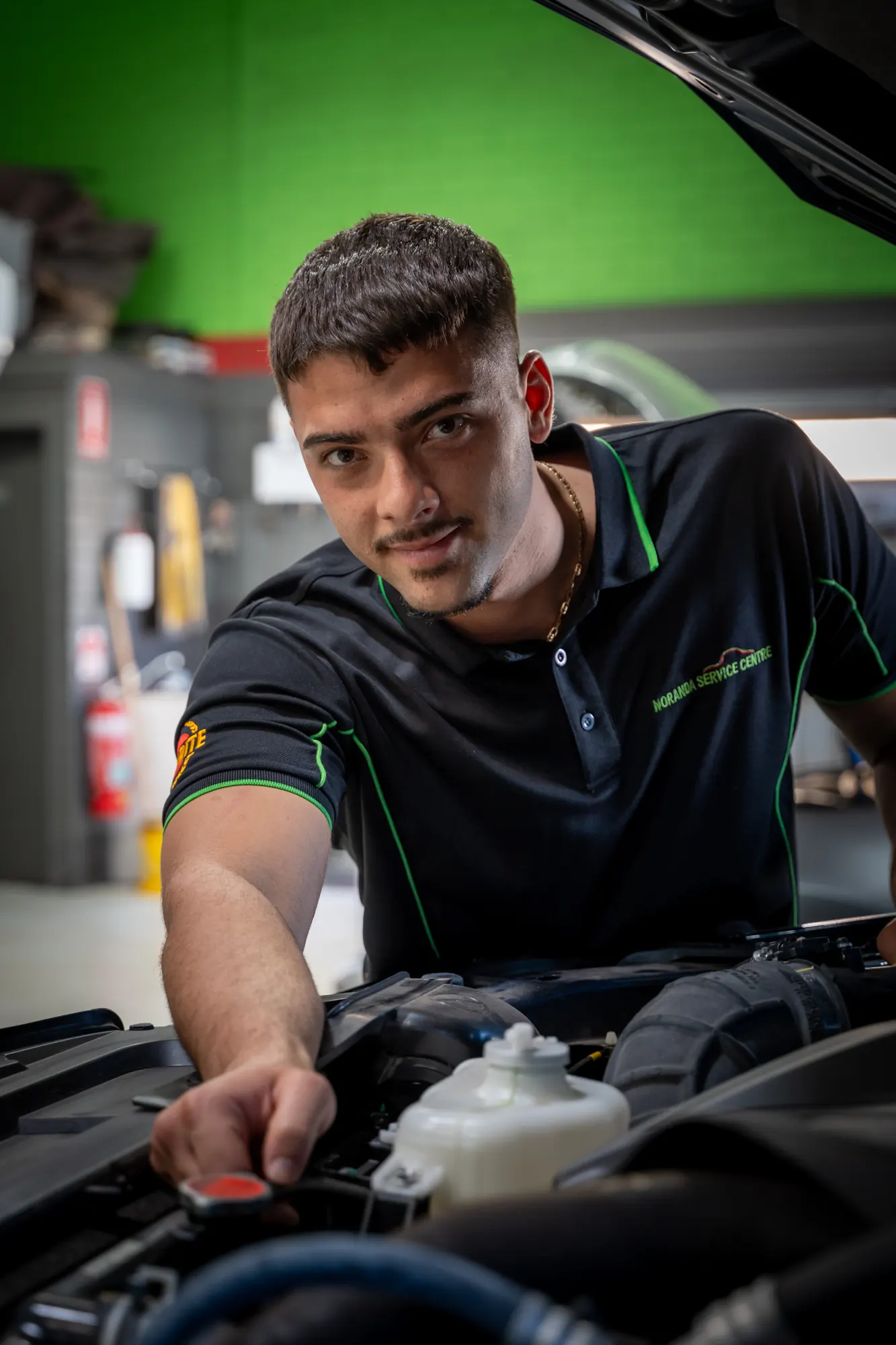
How we find a coolant leak
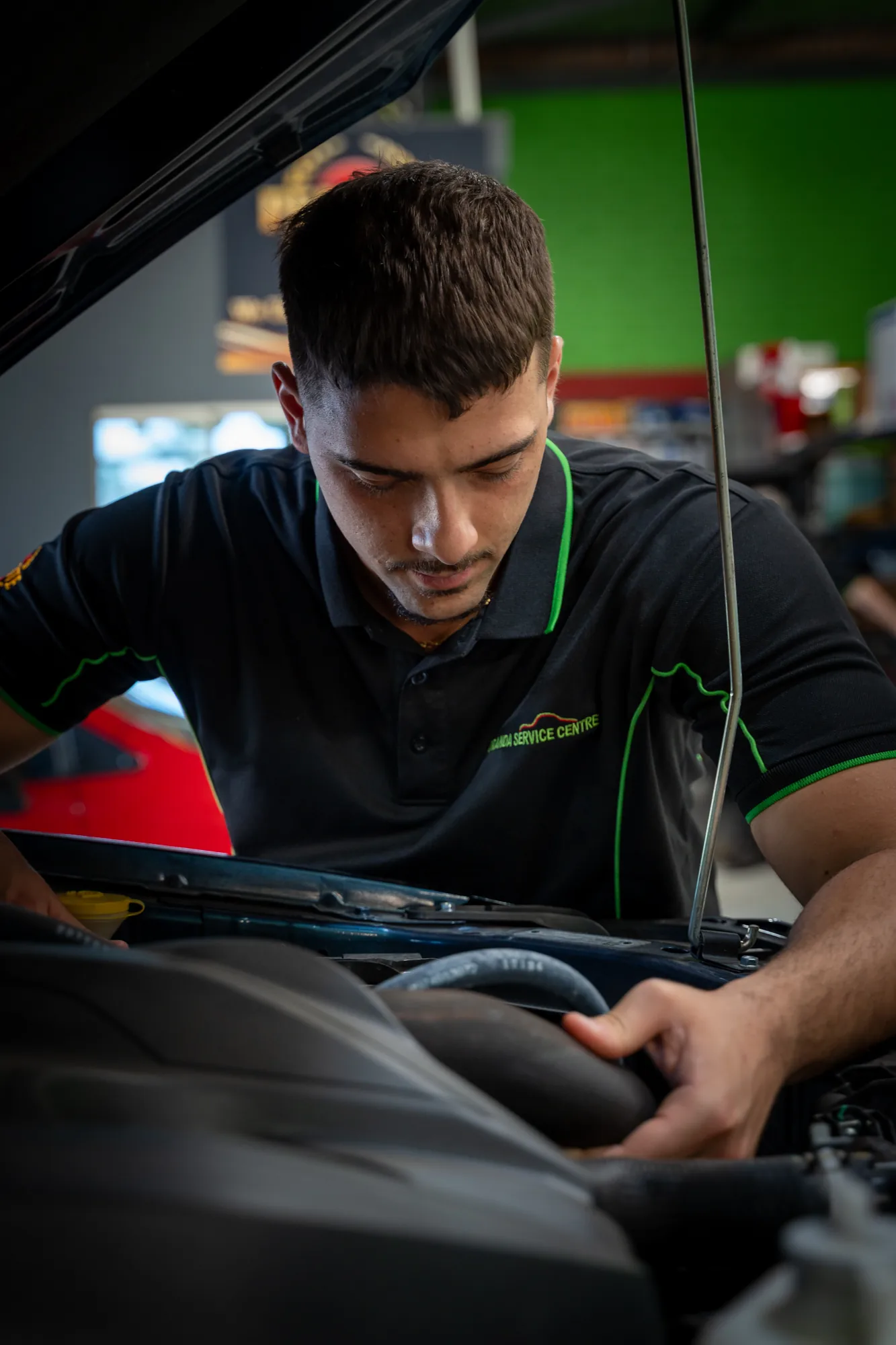
We typically start by checking the coolant level and looking for wet patches or dried residue. If we still need to trace it, we can pressure test the cooling system. That means applying controlled pressure with the engine cold so a small leak can reveal itself.
When there's no visible leak, we may run further tests based on the symptoms. For example, a test can check for engine gases in the coolant if we suspect an internal leak. We explain what we found and what the vehicle needs before discussing repairs.
Common questions
Can I drive with a coolant leak?
If the car is overheating, losing coolant quickly or showing a temperature warning, pull over safely and arrange assistance. If you've noticed coolant loss and the temperature looks normal, call us before driving.
Why does the level keep dropping?
The level can move as coolant heats and cools. Compare readings when the engine is fully cold. A level that keeps falling under the same conditions needs checking, even if the driveway is dry.
Can I top up the coolant?
Check the handbook for the correct coolant and filling procedure, and wait until the engine is fully cold. Repeated top-ups are a sign the system needs inspection.
Get the cooling system checked
If your car keeps losing coolant, book a cooling system inspection at our Mirrabooka workshop. Send a booking request or call (08) 9376 1155.